When The Speedometer Angle Driver Stops Driving.
The speedo right angle drive units are reasonably well built, well they should be for such an expensive little item. But the little sods can fail.
The angle drive in the writers case was really good and reliable, up until it wasn’t, so what could possibly go wrong? Initial thoughts were that the speedometer had failed internally, but a quick check by undoing the cable and inserting a small screw driver and twisting it, dispelled that theory.
The next possibility was that one end of the long cable had lunched itself….but no, that wasn’t the case either, and in any case it was almost new, and was installed with the new five speed gearbox conversion which was completed in the prev two years.
So the last suspect on the list of course was the right angle drive unit fitted to the gearbox. This was new territory for the writer, not ever had one previously, and it has been said by many others that they are not repairable, but we will see about that.
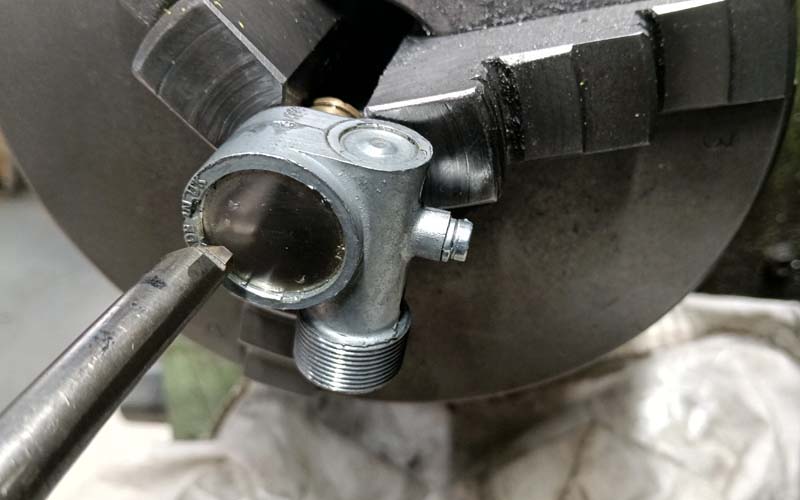
The main quill drive is held in with end plates secured with three staked indents placed at 120 Deg. We mounted the body into the three jaw lathe chuck, then carefully remove the stakes with a very sharp pointed boring bar, rotating the lathe chuck by hand forward, then backwards, then forward again, while gently feeding the tool into each of the stakes. This method ensured that there were no snags of metal that would prevent the plates from being removed. The body is die cast, so one small mistake will render it useless.
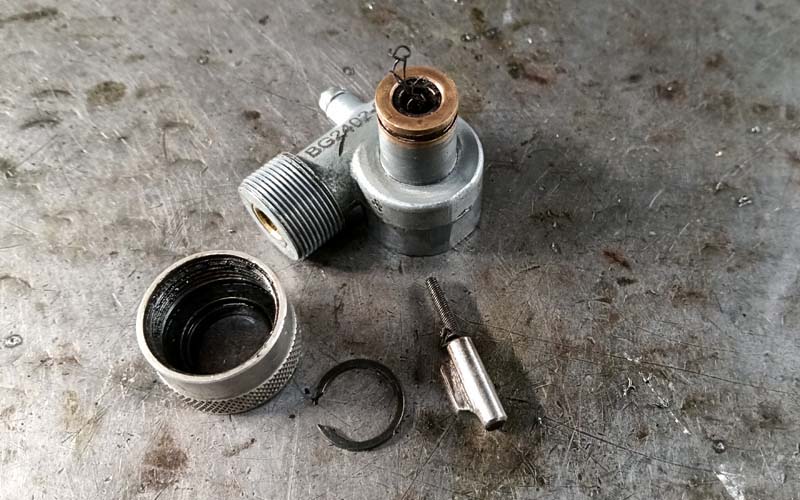
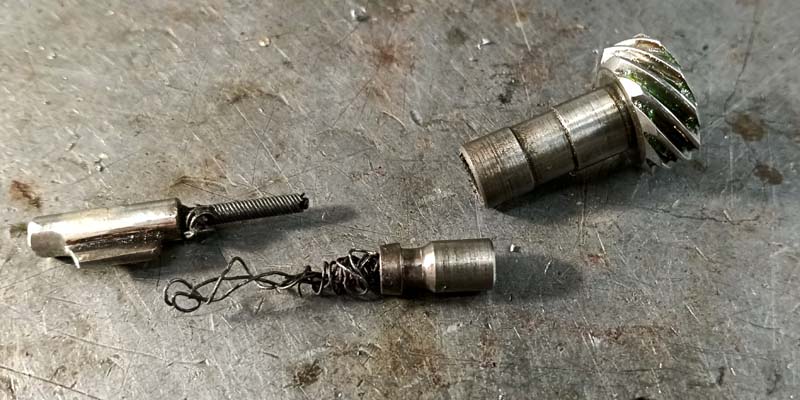
The first process was to remove the threaded cup that holds the angle driver to the gear box mounting point. There is a small snap ring that needs to be gently prized up and out, with out having it go ping, and disappearing into the workshop never never. The reason for the failure is quite clear here, the flexible cable had wound itself up, a result of forward movement most of the time, and the times when car is reversed, so it is no surprise that the feeble cable soon called it quits. maybe the short piece of cable quill is a designed point of failure, much like a shear bolt in PTO drive shafts on Ag equipment.
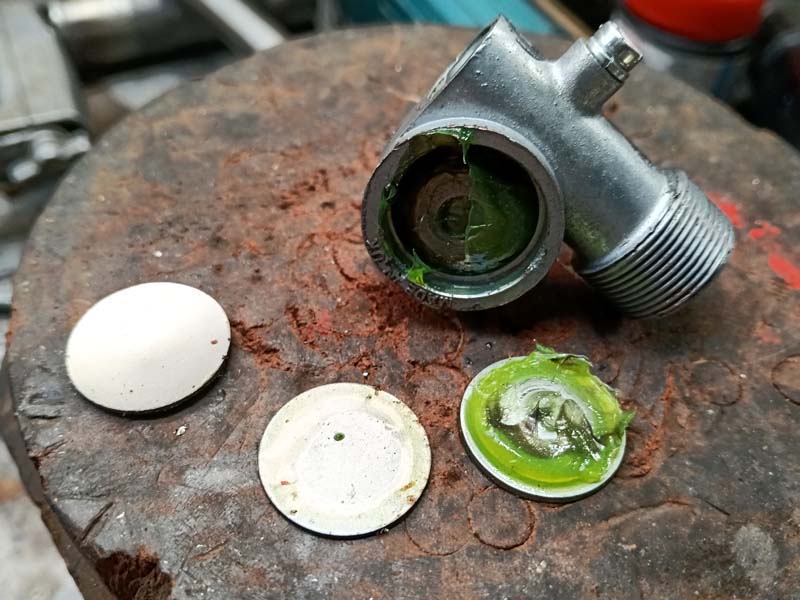
There are three keeper end plates that secure the quill drive. But the outer plate is simply staked to keep them all in place, a far better design would be to have more metal in the body flange, and then machine a groove that would allow a circlip to be put in pl;ace, and the interval servicing or rebuilding of these angle drives would be far simpler, because they are otherwise reasonably robust for the job required.
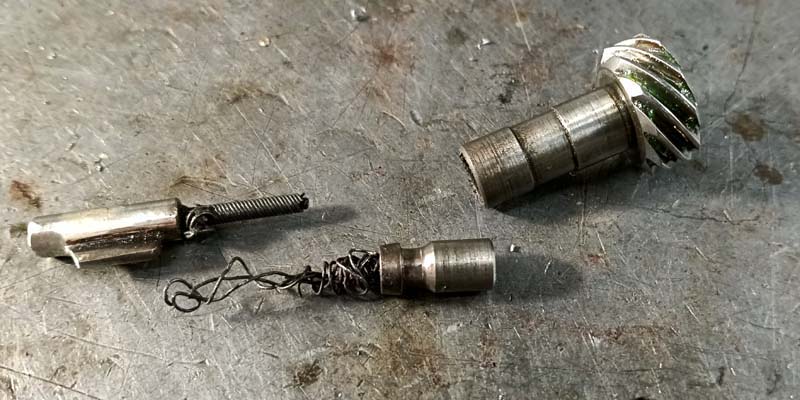
Not happy Jan, to quot an old Aussie TV advert. I really wasn’t expecting this to fail, its probably less than four thousand miles into its duty, the date on the package from RDEnt was 20/3/24, but anyway, crap happens as the truck drivers would say.
We mentioned about a hybrid angle driver, well the hybrid refers to the quill drive. In order to use the ford lotus type of angle drive with the Isuzu five speed gearbox requires a round quill with a raised key or peg as the driver, so this is what we came up with and the arrangement has worked really well, up until the moment it decided to fail. I should mention that the short steel slug is a press fit into the gear wheel housing.
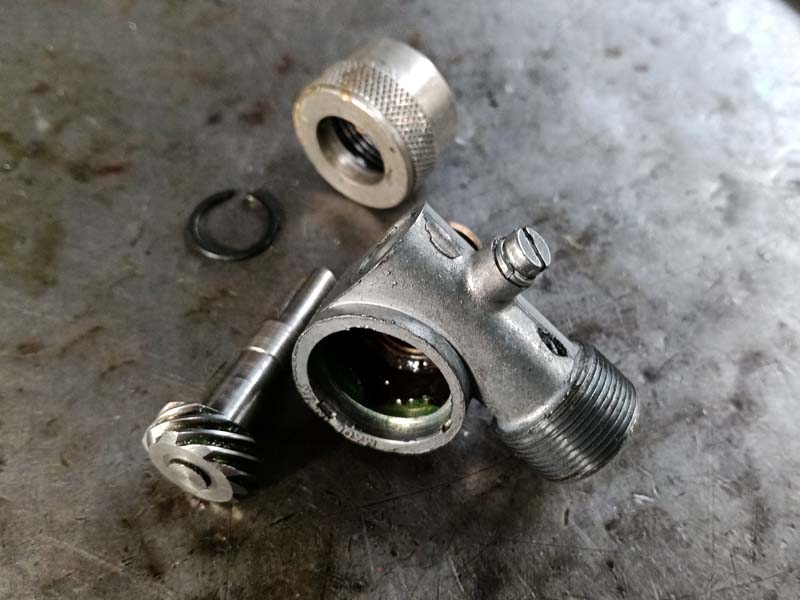
What we did with the quill drive was to machine a short length of mild steel rod to the correct length with the key as the driver, then press the rod into the gear wheel,, machine the end of the rod protruding from the gear wheel, it took a bit of fiddling to get the key to fit correctly in the gearbox drive quill, but it was all good in the end.
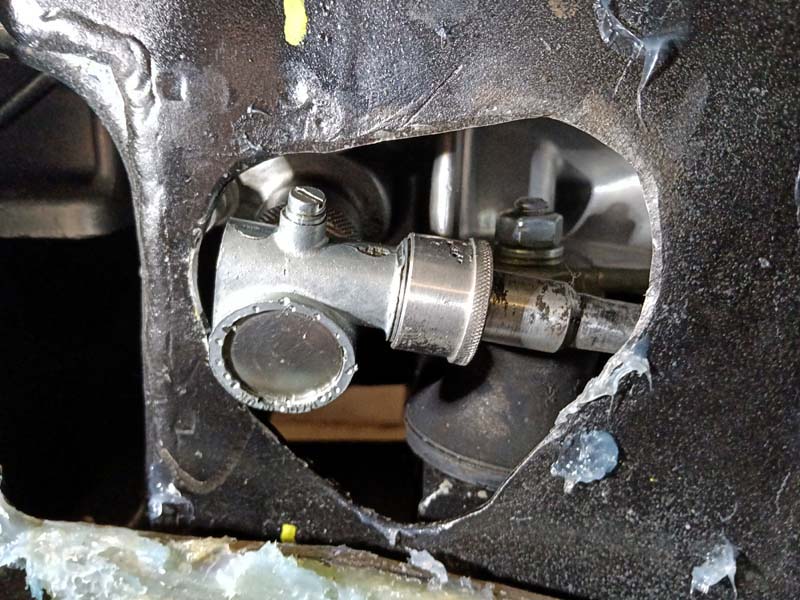
Now, I can imagine the purist experiencing a bit of pain when looking at the shot above. Unfortunately when you get involved in gearbox conversions, not everything fits the norm, and in this case the speedo angle driver protruded outside of the chassis line, so we had to create an aperture with out removing to much of the chassis material, it wasn’t ideally what I was hoping for, but it is what it is, it looks very close, and it is, but nothing hits or knocks anywhere. And no cracks have appeared anywhere, and if they do we will attend to that small problem.
You might be wondering how the end plates are kept in place, if you look close at the photo you will note the re-staking performed around the rim, this was done with a sharp point centre pop punch- Not ideal, but its the best at the moment, now you will understand my comments about why a circlip to hold things together would be a far option.
I don’t rely on the analogue speedometer for road speed, I have a digital speedometer for that, and its GPS dead accurate, but I need to record distance covered (For oil change data) and on any trips that I do in the elan, and that’s really all it is used for.
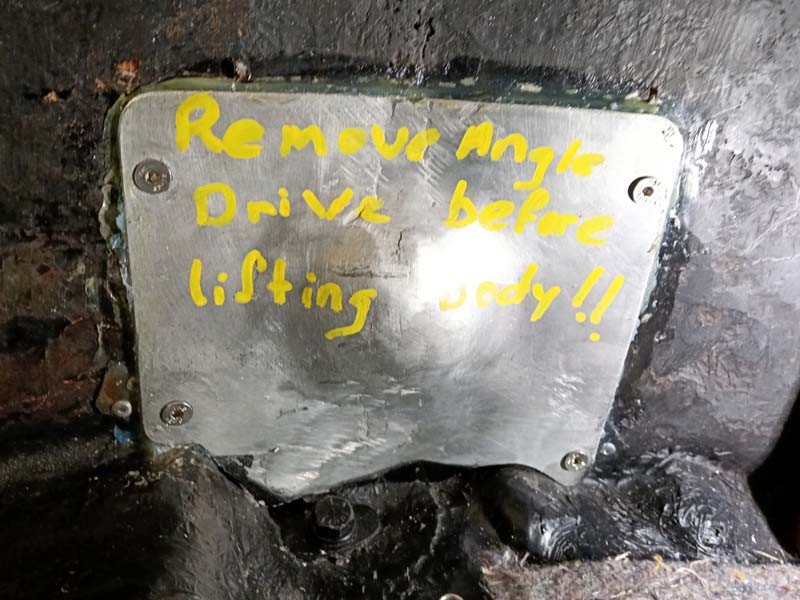
The hand formed aluminium access cover plate, held with metric thread stainless screws and nutserts embedded into the fibre-glass. Complete with a warning note to oneself to remove the angle driver before lifting the body off the chassis.
A word about testing.
I have a floor pit in the workshop, the elan is mostly parked over the pit, which it was in this case, the rear wheels were jacked up and placed onto stands, just enough to clear the floor so they could rotate. Now this enabled the engine to be started and the transmission and drive line to be set in motion to test what was revolving and what wasn’t. That was how I found the broken quill in the angle drive.
Now that its all re-installed, we did a test while it was still up on the stands, did the whole road test in the workshop with out moving an inch, and it all works perfectly. I have a fun group drive on this Thursday, (Now well past) a local group of petrol heads and wives are doing lunch at an Iconic country pub, I am looking forward to that.
So the fix here took a bit of thinking and understanding what would work best in this situation. I would imagine that some people would give up on this, and just bite the bullet and buy a replacement, but with a bit of fiddling they can be repaired. They are a bit delicate and it wouldn’t be hard to damage the housing, so a bit of care is required when working on the angle drive…
In this case, one has to put one’s “Instrument Repair Hat On”.